

Board games aren’t just about fun and entertainment. In fact, they’re powerful tools for childhood development that offer massive benefits you might not even realize.
I’ve spent countless hours researching the cognitive and social benefits of offline activities, and let me tell you: board games consistently rank as one of the most effective ways to boost your child’s development.
In this guide, as a professional board game manufacturer, I’m going to show you exactly why board games are good for kids and how they can transform your family time into a developmental powerhouse.
Let’s dive in.
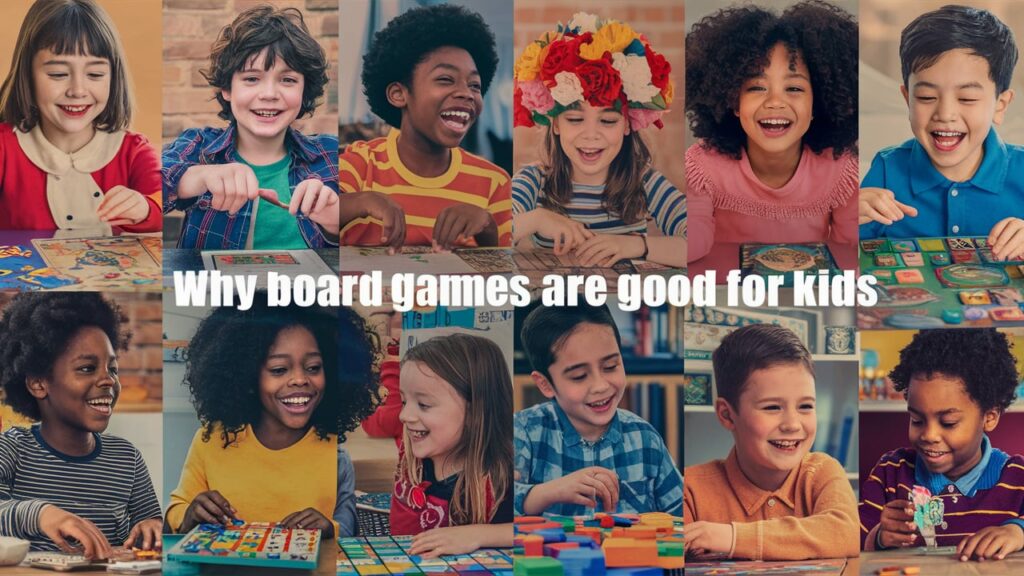
Why Board Games Are Good for Kids
1. Boost Cognitive Development
When it comes to developing your child’s brain, board games are like a CrossFit workout for their cognitive abilities.
Here’s why:
First, board games require strategic thinking. Games like Chess, Catan, or even simpler options like Sequence for Kids force your child to think several steps ahead.
This isn’t just my opinion. Research has found that games requiring frontal brain functions help develop critical skills like:
- Planning
- Problem solving
- Decision making
- Response inhibition
In fact, clinical psychologists like Dr. Beatrice Tauber Prior confirm that “strategy games are useful in helping the frontal lobes of the brain develop.”
The frontal lobes are responsible for executive function skills – exactly what your child needs to succeed academically and professionally later in life.
But there’s more…
2. Improve Math Skills (Without Feeling Like Homework)
You want to know what’s amazing about board games?
Kids learn math without realizing they’re learning math.
Think about it:
- Counting spaces on game boards
- Adding up scores
- Calculating probabilities
- Managing resources in games like Catan Junior
When children play games with dice or scoring systems, they’re constantly engaging with numbers in practical, fun ways.
For example, games that use play money (like Monopoly Junior) help kids develop number sense and basic arithmetic skills. Research shows that board games specifically designed around numbers can significantly improve mathematical concepts.
Compare that to flashcards or math worksheets. Which do you think your kid would rather do?
The bottom line? Board games make math tangible, interactive, and fun.
3. Develop Essential Social Skills
Here’s something that might surprise you:
Board games are one of the most effective tools for developing social skills in children.
Why? Because they create structured opportunities for social interaction.
Think about it this way:
When kids play board games, they’re learning:
- Turn-taking: A fundamental social skill that teaches patience
- Following rules: Essential for classroom success and later life
- Winning gracefully: Building emotional intelligence
- Losing gracefully: Developing resilience
- Negotiation: A vital life skill for everything from playground disputes to career success
One research study found that both competitive and cooperative board games increased prosocial behaviors in preschool children, including sharing and helping others.
These aren’t just nice-to-have skills. They’re essential for your child’s social development and future success.
4. Natural Boost for Language Development
Want to improve your child’s vocabulary and language skills?
Board games are a sneaky way to do exactly that.
Here’s how they work:
First, many games require reading cards, following written instructions, or communicating ideas to other players. This naturally incorporates language into play.
Second, games create natural conversation opportunities. Kids discuss strategies, negotiate rules, and engage in playful banter – all while building communication skills.
For example, games like Scrabble Junior or Boggle specifically target vocabulary and spelling. But even games without an explicit language focus contribute to verbal development through player interaction.
For reluctant readers, board games can be particularly powerful. As one expert mentioned in our research: “A round of the BOB Books Happy Hats Beginning Reading Game will help them expand their vocabulary and flex their spelling skills.”
The result? Enhanced language skills without your child ever feeling like they’re studying.
5. Improve Focus and Attention Span
In today’s world of digital distractions, children’s attention spans are getting shorter.
Board games are the perfect antidote.
Why? Because completing a board game requires sustained focus – something many kids struggle with today.
As Dr. Prior explains: “Board games, when played without interruptions, can help lengthen a child’s attention span.”
But there’s an important caveat:
To get this benefit, you need to commit to finishing the game without digital distractions. That means no phone checking, no TV in the background, and no Alexa interruptions.
This focused attention practice carries over to other areas:
- Classroom learning
- Homework completion
- Reading longer books
In a fascinating finding, some research even suggests that strategic board games may improve attention in children with ADHD by activating the frontal brain regions responsible for attention regulation.
6. Build Confidence and Self-Esteem
Here’s something most parents don’t realize:
Board games are confidence-building machines.
Think about it:
- Every time your child masters a new game, they experience a sense of accomplishment
- When they win (or even just improve), they get immediate positive feedback
- Games provide a safe space to take risks and make decisions
- Children develop a growth mindset when they improve through practice
For shy or timid children, board games are particularly valuable. They provide structured ways to interact with others, helping them develop stronger senses of individuality and creativity.
This leads to greater self-esteem and a feeling of being included and noticed – essential components of healthy psychological development.
7. Strengthen Family Bonds
Let’s be honest:
Quality family time is harder to come by than ever.
That’s why board games are such a valuable tool for modern families. They create natural opportunities for connection that don’t revolve around screens.
In fact, countless research articles highlight the benefits of family social interaction on the cognitive, social, and emotional development of children.
Here’s why board games excel at family bonding:
- They create shared experiences and memories
- They put everyone on an equal playing field (unlike video games where kids often dominate)
- They foster communication across generations
- They’re accessible to all ages (especially with age-appropriate games)
As one parent in our research noted: “Playing board games as a family are some of my favorite memories from my own childhood and so far into motherhood.”
The emotional connection formed during these game nights has lasting benefits for family cohesion.
8. Reduce Anxiety and Stress
Here’s something unexpected:
Board games can actually help anxious kids manage their emotions better.
How? Several ways:
First, board games provide structured social interaction. For kids who struggle with social anxiety, the clear rules and expectations of board games make socializing less intimidating.
Second, they offer a healthy escape. When children focus on a game, they temporarily set aside their worries and concerns.
Third, games teach emotional regulation. Learning to handle the disappointment of losing or the excitement of winning helps kids develop emotional intelligence.
As clinical psychologist Dr. Regine Galanti explains: “Board games can help anxious kids learn how to navigate friendships more easily. Because they’re structured, board games can provide an easier way to build interpersonal relationships with peers.”
Some therapists even use board games as alternatives to time-outs when working through behavioral issues.
9. Perfect Alternative to Screen Time
Let’s face it:
Most kids today get WAY too much screen time.
Board games offer an engaging alternative that most children actually enjoy.
Consider these statistics:
- The average child spends 4-6 hours daily on screens
- Excessive screen time is linked to attention problems, sleep issues, and reduced social skills
- The American Academy of Pediatrics recommends limiting recreational screen time
Board games provide entertainment without the downsides of digital media. They’re interactive, social, and often educational – the perfect trifecta for healthy child development.
As one expert noted: “Families are struggling to find the balance between digital and real-life connections, but board games provide a tool for that emotional connection to each other.”
The Best Board Games for Different Ages
Now that you understand why board games are good for kids, you might be wondering: which games should I start with?
Here’s my breakdown by age:
For Ages 2-3
- Go Away Monster: Perfect for learning turn-taking and matching
- First Orchard: Introduces colors, cooperation, and basic dice rolling
- Snug as a Bug in a Rug: Teaches colors, shapes, and numbers
For Ages 4-5
- Connect Four: Develops strategic thinking
- Guess Who: Builds deductive reasoning
- Rhino Hero: Improves fine motor skills
- Outfoxed: Introduces logic and deduction
For Ages 6-8
- Catan Junior: Teaches resource management and planning
- Ticket to Ride First Journey: Improves geography knowledge and planning
- Sushi Go: Introduces card drafting and set collection
- Labyrinth: Develops spatial awareness
For Ages 9+
- Catan: Builds negotiation and resource management skills
- Pandemic: Encourages cooperation and problem solving
- Splendor: Teaches economic concepts and forward planning
- Wingspan: Introduces wildlife and strategic thinking
The key is matching the game to your child’s current abilities while providing just enough challenge to keep them engaged.
Making the Most of Game Night: Pro Tips
Want to maximize the benefits of board games? Here are some actionable tips:
- Start simple and scaffold up. Begin with games that match your child’s ability, then gradually increase complexity as they master each level.
- Be strategic about teaching. Explain rules clearly and concisely. For younger children, demonstrate rather than just explain.
- Don’t always let kids win. While occasional wins build confidence, learning to lose gracefully is an important life skill.
- Focus on fun, not competition. Emphasize enjoyment over winning, especially for younger players.
- Create a regular game night routine. Consistency helps establish positive habits and expectations.
- Play without distractions. Put away phones and turn off the TV to maximize focus and family connection.
- Talk about strategies. After games, discuss what worked and what didn’t to build critical thinking skills.
- Use games as teaching moments. When challenges arise (like losing or conflicts), use them as opportunities to develop emotional intelligence.
Conclusion
The evidence is clear: board games offer extraordinary benefits for child development across multiple domains. From cognitive skills to emotional regulation to family bonding, few activities pack such a powerful developmental punch while still being genuinely fun.
So the next time you’re wondering how to spend quality time with your kids while supporting their development, remember why board games are good for kids – they’re not just entertainment, they’re investments in your child’s future success.
Ready to get started? Pick a game from the age-appropriate list above, set aside some uninterrupted family time, and watch the magic happen.
The bottom line? In a world dominated by screens, board games provide an invaluable opportunity to connect, learn, and grow together as a family.
What’s your favorite board game to play with your kids? I’d love to hear in the comments!


