

Board game entrepreneurs earn $1.2 billion annually – but success demands equal parts creative design and business strategy. As a professional custom board game manufacturer, I wrote this comprehensive guide to reveal how to transform your game concept into a commercially viable product while avoiding industry pitfalls.
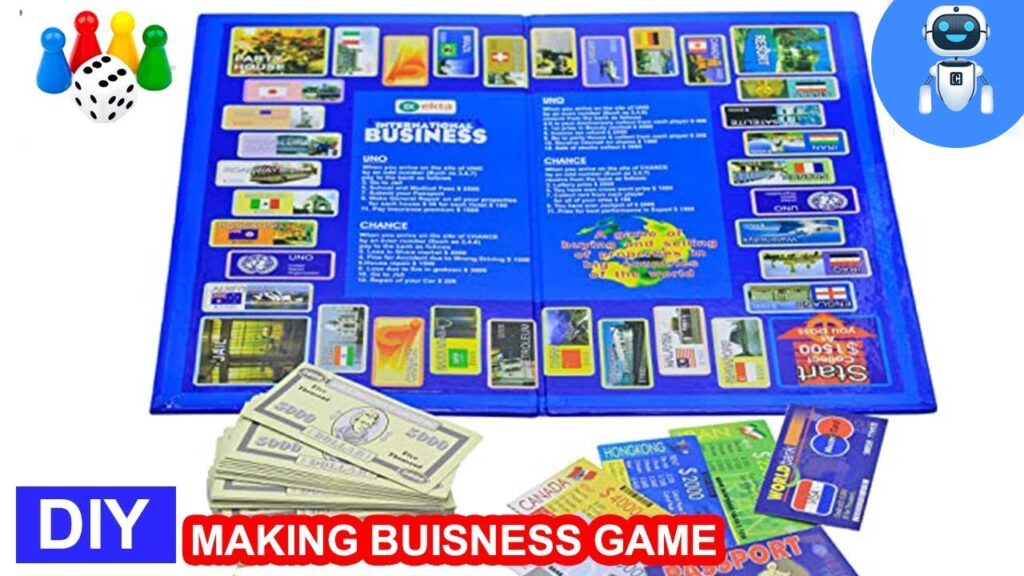
The Business Board Game: Why It’s More Than Just Fun
Business board games solve a critical problem: they transform complex learning into tactile experiences. Corporate trainers use titles like “Cashflow” to teach financial literacy while startups use custom games for team building. Market data shows a $27.7 billion tabletop industry by 2025 growing at 9.2% CAGR – fueled by educational and corporate demand.
How to Make a Business Board Game?
Step 1: Ideation and Conceptualization
Validate your concept before prototyping:
- Conduct “problem interviews” with corporate trainers and HR managers
- Analyze competitors on platforms like BoardGameGeek
- Define core learning objectives: financial acumen, negotiation skills, or supply chain management
- Calculate demand: Target niche = (Total industry size) x (Your unique value %)
Key Insight: Business games thrive on dilemma-driven mechanics. Forge Foundry’s “Supply Chain Wars” succeeded by forcing players to choose between ethical sourcing and profit margins.
Step 2: Designing the Game Mechanics
The Trinity of Business Game Design
| Element | Business Application | Example Mechanism |
|---|---|---|
| Core Loop | Skill reinforcement | Quarterly P&L simulations |
| Progression System | Milestone achievement | Promotions unlocking new roles |
| Player Interaction | Real-world negotiation practice | Resource trading/auctions |
Critical balance tests:
- Run 10+ playtests with target demographics
- Measure comprehension through post-game quizzes
- Adjust complexity using the Gamified Learning Index:
(Rules explanation time) ÷ (Player engagement duration) ≤ 0.25
Step 3: Prototyping and Rapid Testing
Cost-Efficient Prototyping Methods
- Paper prototyping: $30 materials (cards, tokens, markers)
- Print-and-play testing: Free PDF distribution to 100+ testers
- Digital simulation: Tabletop Simulator ($20) for remote testing
Case Study: “Startup Showdown” saved $14,000 by iterating through 7 paper versions before digital prototyping. Blind testing revealed unbalanced investor mechanics eliminated 37% player drop-off.
Step 4: Business Models for Board Games
Three Monetization Frameworks:
1️⃣ B2C Premium Model
- $49-$129 price point
- Requires strong IP and components
- Example: “Stonemaier Games’ success with Wingspan”
2️⃣ B2B Licensing Model
- $5,000+ corporate licensing fees
- Customizable components for branding
- Example: Deloitte’s “Finance Frontier” training game
3️⃣ Hybrid Crowdfunding
- Kickstarter pre-orders for manufacturing
- Tiered corporate backer rewards
Legal Tip: Form an LLC before prototyping – it protects personal assets from liability at minimal cost. Non-profit entities are impractical for commercial games.
Step 5: Building a Pre-Launch Community
Conversion-Driven Marketing Tactics:
1. Social Proof Engine:
   - Run monthly playtest events at co-working spaces
   - Collect testimonials with SPECIFIC skill improvements

2. Content Marketing Funnel:
   Blog Post → Free Print-and-Play → Email List → Crowdfunding Launch
   (62% conversion lift from educational content)

3. Strategic Outreach:
   - Pitch HR publications with "gamified learning" studies
   - Partner with business schools for curriculum testing
Brian’s Principle: “Show up to play – not sell. I built my first 1,000-email list by hosting weekly game nights at HobbyTown stores.”
Step 6: Manufacturing Your Board Game
China vs. US Production Comparison:
| Factor | China Manufacturers | US Manufacturers |
|---|---|---|
| Unit Cost (1k) | $7.20 | $18.90 |
| Shipping Time | 60-90 days | 14-21 days |
| Minimum Order | 500 units | 1,000 units |
| Custom Tooling | $300-$900 | $1,200+ |
Critical Checklist:
- Use Panda GM for Asian manufacturing (industry standard)
- Demand physical proofs before full production
- Budget 15% for defective units/replacements
Step 7: Marketing and Sales Funnels
Omnichannel Launch Strategy:
Kickstarter Pre-Launch
50% discount for early birds
Amazon FBA Launch
Corporate Sales Team Outreach
Teacher Resource Portal
- Customer Acquisition Costs:
- $2.10 via social ads
- $0.80 via organic content
- $9.70 via trade shows
Proven Tactic: Bundle “Educator Packs” with curriculum guides – schools pay 300% premiums for ready-made teaching tools.
Step 8: Legal and Financial Essentials
- IP Protection:
- Mechanics can’t be copyrighted
- Art/Vernacular requires trademark (GS1 barcodes: $250)
- Production Funding:
- Convertible notes for friends/family
- Revenue-based financing (15% share)
- Tax Structures:
- LLC pass-through taxation
- Q4 estimated tax payments
Regulatory Note: All games require EN-71 safety compliance testing ($1,100). Include quarterly budget for replacement parts – average 8-12% defect rates.
Step 9: Post-Launch: Building a Lasting Business
Player Retention Metrics:
- Expansion Pack Attachment Rate: 42%
- Corporate Reorder Rate: 68%
- Average Playthroughs Before Shelf Life: 11.3
Community Building:
- Release quarterly scenario packs
- Host national tournaments
- Develop companion apps
Step 10: Learning from the Best
Stonemaier Games’ $200M Blueprint:
- 12-month “extreme beta testing” periods
- Transparent component cost breakdowns (builds trust)
- “Champion Program” for superfans
Critical Failure Analysis: 2024’s “Pivot Point” bankruptcy taught:
- Avoid complex miniatures raising production costs 400%
- Secure distributor agreements BEFORE manufacturing
- Maintain 6-month cash runway through pre-orders
The Board Game Business Battle Plan
How to make a business board game? Combine ruthless validation, lean production, and community-first marketing. Final manufacturing checklist:
- Verify prototype with 500+ test sessions
- Secure $14,000 minimum production funding
- Build email list of 1,000+ potential buyers
- File LLC and trademark applications
- Negotiate fulfillment center contract
Remember: No business survives on mechanics alone. As Eric Slivinski (Pioneer Games) states, “Corporate buyers pay $79 for supply chain training – not cardboard and meeples.” Package measurable skill outcomes.
How to make a business board game transforms from dream to viable venture when you treat gameplay as the product, and learning outcomes as your value proposition. Start designing today – but build your business model first.


