

Question cards are a key component of many popular board games. They inject an element of surprise and challenge that keeps gameplay exciting. As a professional custom board game manufacturer, I wrote this article to walk you through a step-by-step process to create compelling, balanced question cards for your own board game.
Why Are Question Cards Important in Board Games?
Before diving into the specifics of building question cards, it’s helpful to understand why they play such a vital role in board games. At their core, compelling question cards:
- Add variety and surprise: Randomized questions prevent repetitive gameplay, keeping players engaged through unpredictable twists.
- Enable customization: You can tailor card content to suit your game’s theme and knowledge level of players.
- Allow strategic elements: Factoring in card difficulty/rewards during gameplay is an extra dimension.
- Test skills: Answering questions evaluates players’ grasp of the material.
- Spark discussion: Debating card answers facilitates social interaction.
In short, thoughtfully-crafted question cards transform straightforward board games into dynamic, interactive experiences.
How to Make Question Cards for a Board Game?
With the “why” covered, here is a step-by-step framework for producing awesome question cards for your homemade board game:
1. Define your question categories and distribution
Start by organizing your cards into logical categories that align with your game’s theme and target audience. Common approaches include:
- Subject-based categories (Geography, Science, Pop Culture)
- Question format categories (True/False, Multiple Choice, Fill-in-the-Blank)
Also decide the distribution of cards across categories so gameplay feels balanced. Track this as you write questions to maintain your intended quotas.
2. Establish a range of difficulty levels
The most compelling question decks feature a spectrum of difficulty to accommodate different skill levels and keep experienced players challenged. Aim for an approximate distribution of:
- 40% Easy
- 40% Medium
- 20% Difficult
Test questions with your target audience to fine-tune difficulty ratings before finalizing the card content.
3. Write clear, focused and engaging questions
With categories planned, shift your focus to crafting each individual question. Great questions exhibit:
- Brevity
- A single clear answer
- Active voice construction
- Avoidance of obscure trivia or trick questions
Inject variety by mixing up question formats: true/false, fill-in blanks, multiple choice, identify images, act out prompts, solve puzzles, etc.
4. Refine card content through playtesting
Playtest your cards with diverse player groups, tracking performance metrics around:
- Which questions elicit the most discussion and engagement?
- Which cards confuse players or cause frustration?
- How accurately do difficulty ratings match actual performance?
Refine and augment your card content based on playtesting feedback over multiple iterations.
5. Create a durable, themed card design
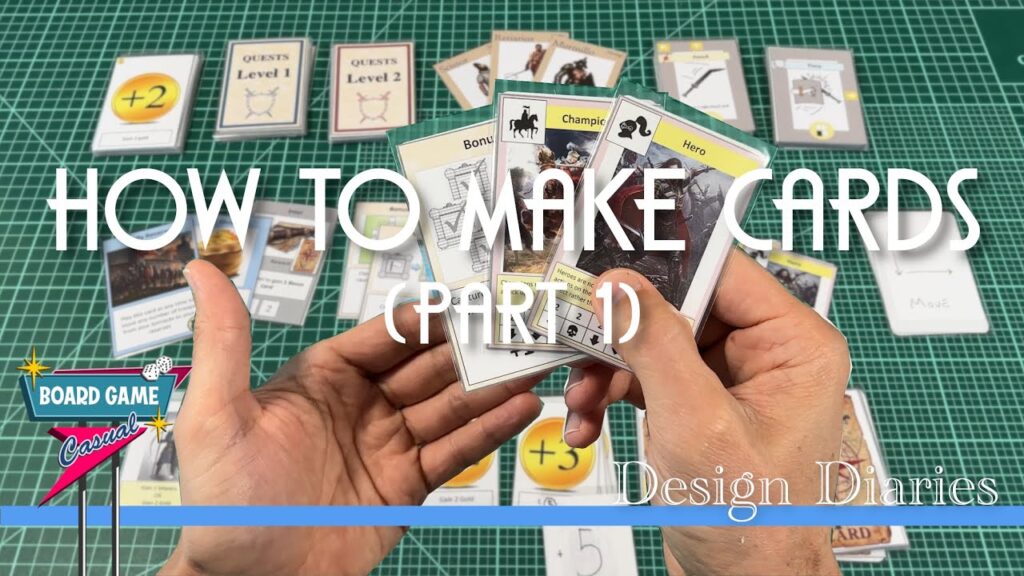
With refined content in hand, shift focus to physical card creation. Sturdy cardstock and rounded edges make cards more playable and resistant to wear-and-tear during shuffling and handling.
Lean into your game’s unique theme through background illustrations and graphic borders to customize the look and feel of your homemade question cards.
Concluding Thoughts
Question cards enable you to take playable board game concepts and infuse them with additional layers of surprise, variety and challenge that transform gameplay. By organizing compelling content across balanced categories and calibrated difficulty spectra, crafting thematic graphical elements, and diligently playtesting, you can produce question card decks that make your homemade board games shine.
The difference between basic board games and classics like Trivial Pursuit lies in unlocking the full interactive potential of skill-testing, discussion-driving question cards. Hopefully this guide provides a blueprint to help your custom question decks achieve similar greatness!


